LazAI Explainer Challenge
Claim Layer3 rewards

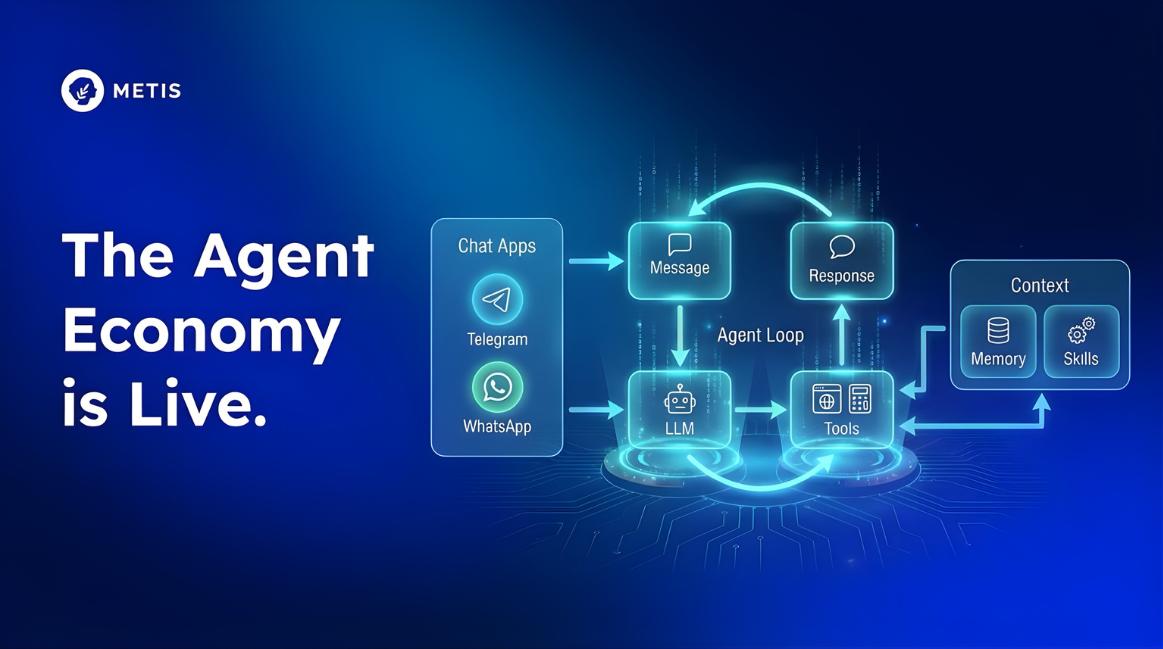

The Agent Economy is not an upcoming trend - it has already begun. It is not a proof-of-concept, nor an experiment confined to tech circles. It is a structural transformation in progress, reshaping how organizations operate, how value is created, and how coordination occurs across the internet.
AI is breaking through networks designed for “human-scale” interaction. The cost of coordination, generation, and transactions is being compressed to near zero, and the boundary between human and machine behavior is rapidly disappearing. The key question is no longer whether AI exists. As a16z points out, the challenge is that the internet was never designed to differentiate between humans and machines while maintaining privacy and usability. In this context, the Agent Economy is not a future narrative - it is the structure of reality.
For a long time, AI was regarded as a tool. It answered questions, generated content, and assisted with analysis—but it remained a system to be called upon. That phase has ended. The recent surge in popularity of OpenClaw and ClawdBot highlights a critical trend: AI agents have undergone a qualitative upgrade. Notably, OpenClaw enables agents to directly “capture” and persist user data in personalized memory, allowing each agent to retain interaction history in its long-term memory. This approach breaks the traditional data silos of the internet, giving users real ownership of their information and experiences. Such memory not only enhances the agent’s intelligence and continuity but also lays the foundation for trust and collaboration in a decentralized ecosystem.
The new generation of AI agents is no longer just a model behind an interface. They now possess behavioral capabilities:
McKinsey’s latest research shows that agentic AI, capable of reasoning, planning, and tool use, is key to achieving an AGI-level productivity leap. This assessment is already in practice: out of McKinsey’s 60,000 global employees, roughly 25,000 AI agents are collaborating with over 40,000 human employees.
The message is clear: agents are becoming productive units, not experimental novelties. Evolution is happening faster than we imagine. Remaining passive now risks being left behind in the next wave of competition.
In response to this reality, the Metis ecosystem has proactively positioned itself within the Agent Economy. Built on the Metis Agent framework, GOAT Network’s “super employee” EVE has been live since February 2. The team has invested over 100 hours interacting with her, sharing organizational knowledge and resources to build collective memory and continuously optimize outputs. EVE can intelligently analyze feedback, assist with decision-making, and collaborate with humans on future tasks.
EVE is not a proof-of-concept. She is a real-world example of this trend in action. Her development is not based solely on algorithmic fine-tuning but grows through deep interaction and knowledge sharing with the team.
The name EVE symbolizes “origin” and “creation.” She represents GOAT Network’s first AI employee and embodies our first practical experiment in a human-agent collaboration paradigm and the transition toward an AI-native organization.
Core capabilities of EVE:
EVE’s success is not only as a “super employee” but also in helping Metis redefine its customer base—from purely human to a hybrid ecosystem including agents. This transition demonstrates how agent adoption profoundly reshapes workflows and interactions, emphasizing the urgency of building a trustworthy, scalable agent ecosystem.
EVE’s introduction does more than add a tool—it fundamentally changes team collaboration and decision-making processes. Her success highlights a crucial insight: agents do not replace humans; they augment human capability.
Human roles are evolving: In the Agent Economy, humans transition from “doers” to “coaches, trainers, and decision-makers.” No longer required to manage every detail, humans can focus on strategy, innovation, and high-value decisions. This shift improves efficiency and allows humans to concentrate on work requiring creativity and judgment.
Yet, as agents like EVE scale, a sharp tension arises: scalability becomes cheap, but trust becomes harder.
When AI can mass-produce voices, faces, and social personas, traditional identity systems fail. This is the fundamental driver behind Metis’ deep investment in the Agent Economy. As a16z emphasizes, blockchain restores the missing layer of trust and provides three key infrastructures for the agent economy:
Based on a deep understanding of the Agent Economy trend, Metis, in collaboration with GOAT Network and LazAI, has launched Debot - a decentralized AI agent framework. The name is currently still an internal code name, but it is derived from “Decentralized Bot,” reflecting our vision: to enable each Agent to grow into an independent super-individual and autonomously establish social consensus.
Debot’s Core Advantages:
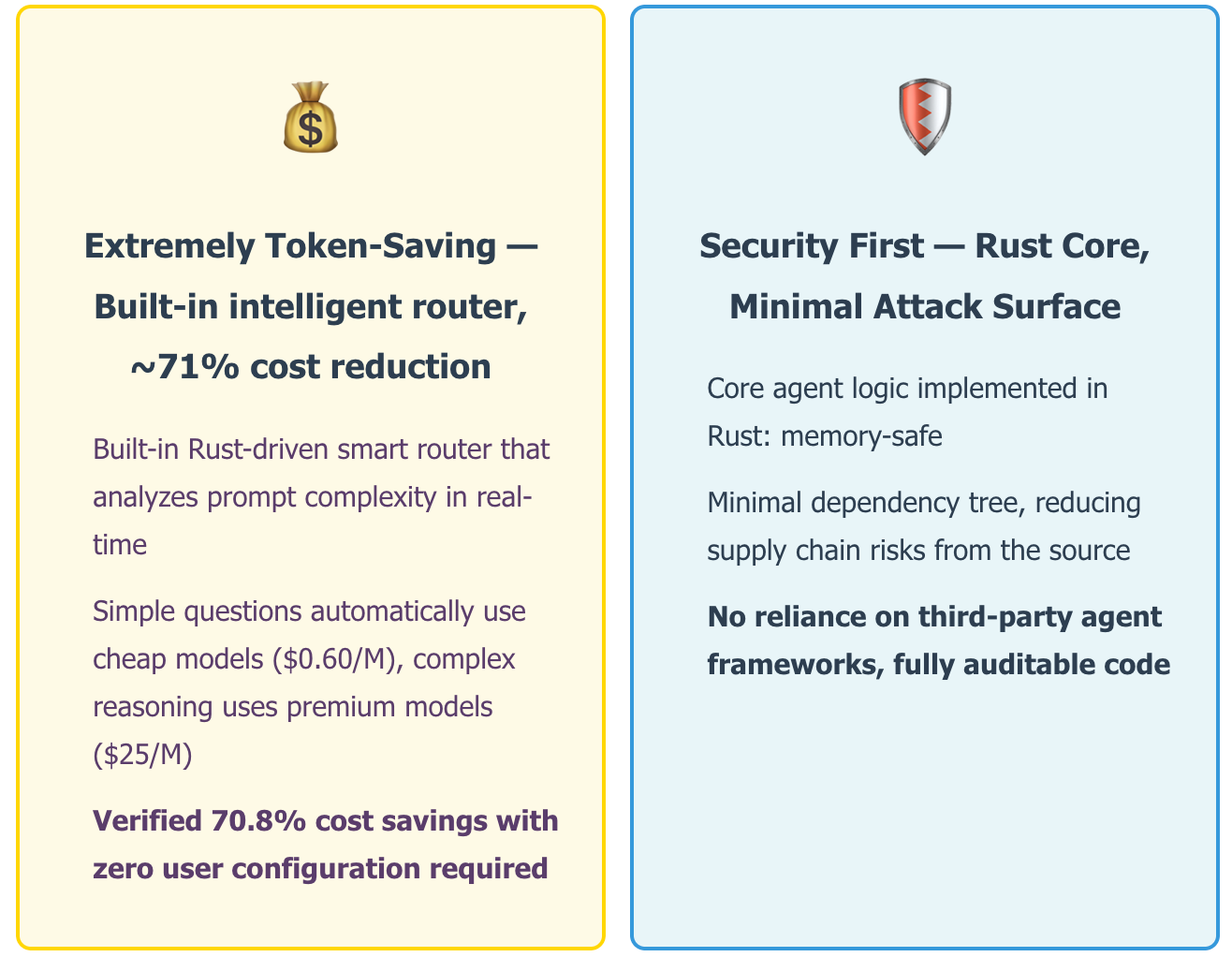
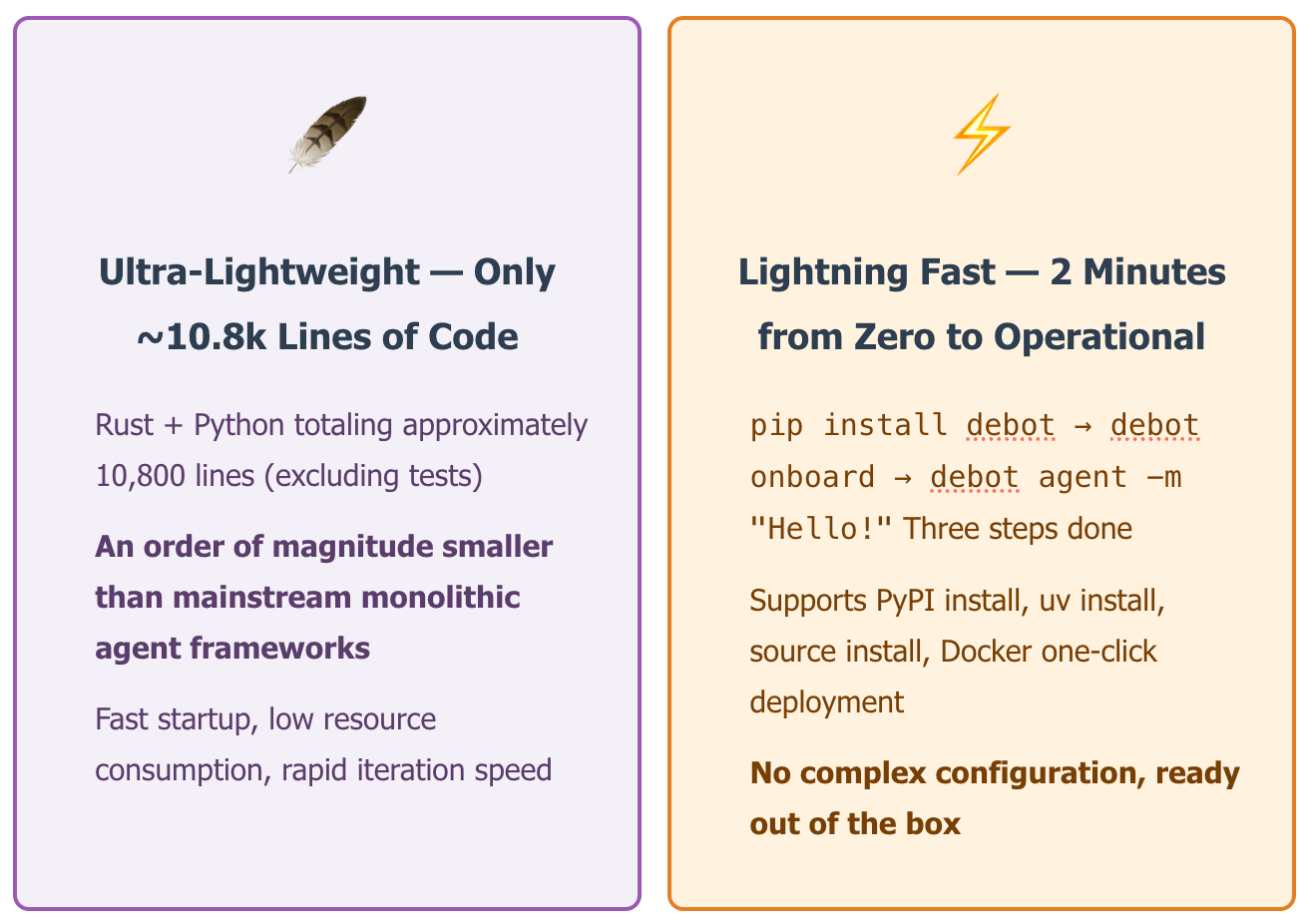
Debot vs Mainstream Agent Frameworks:
This is not just engineering optimization - it reflects a deep understanding of user needs in the Agent Economy era. Debot’s design philosophy stems from a core insight: AI can forge content, but cryptography makes large-scale imitation of unique human identity costly. By restoring scarcity at the identity layer, blockchain raises the marginal cost for impersonators without adding friction for legitimate human behavior. This is why we built Debot on a decentralized infrastructure - not for hype, but because it is the only way to make an agent ecosystem trustworthy and scalable.
Debot’s significance extends far beyond a product. We chose to open-source it because we believe in the power of ecosystem collaboration.
Benefits of open source:
The strategic collaboration between Metis, LazAI, and GOAT Network demonstrates the power of ecosystem synergy:
This is not just a technical combination; it is a strategic ecosystem initiative. Controlling internet identity equates to controlling participation. In the traditional internet, platforms can revoke access, levy fees, or monitor users. Decentralization flips this dynamic: users control their own identities, making them safer and more censorship-resistant. This is why we chose to build an open-source, decentralized agent framework rather than a closed proprietary system. In the Agent Economy, identity, privacy, and payment trustworthiness will determine everything.
This is not a proof-of-concept - it is a transformative organizational and market shift. We recognize the enormous potential of agents and the limitations of the traditional “human + software” model.
Through EVE, we have demonstrated the feasibility of agents as “super employees” - capable not only of executing tasks but also of thinking proactively, making suggestions, and continuously evolving. Through Debot’s open source release, we provide tools and platforms for developers and enterprises worldwide to participate in the Agent Economy.
Business interactions are evolving: EVE’s presence is not merely about efficiency. She is subtly changing the language and structure of business interactions. Institutional knowledge moats are growing, and code execution is depreciating, as execution can be outsourced to agents. The real challenge is: do you know what to do, and can you convert experience into transferable, reusable processes and principles?
The rise of the “one-person company”: With digital colleagues like EVE handling research, writing, coordination, and partial decision support, a single person can lead an “AI team.” Organizational scale will be determined by cognitive density and process assets, not merely headcount.
The internet is becoming “non-human”: The future internet will be saturated with AI agents. Many services will no longer be primarily human-focused but agent-focused. As agent-to-agent interactions become mainstream, collaboration, privacy, payment, reputation, and compliance will all be redefined.
The Agent Economy has begun, and the window of opportunity is opening. Future organizations will no longer be composed solely of humans. As more EVEs emerge across enterprises and agent-to-agent collaboration becomes standard, the operational logic of the entire internet will be rewritten.
It’s time to act. We invite you to experience Debot and join the revolution of the intelligent agent economy. Whether you are a developer building your own AI assistant or a decision-maker deploying intelligent agents for your enterprise, Debot provides the tools and support you need.
Visit the Debot GitHub to get started or join our community to drive the Agent Economy forward with developers worldwide. Make your move before the wave of the agent economy passes. Don’t just watch - act now and help define the next-generation internet.