LazAI Explainer Challenge
Claim Layer3 rewards



An introduction and comparison for developers and business colleagues alike: what DeepSeek
Harness, OpenClaw, Hermes Agent, and WorkBuddy each solve, where their limits are, and
which demo proves the difference on the spot.
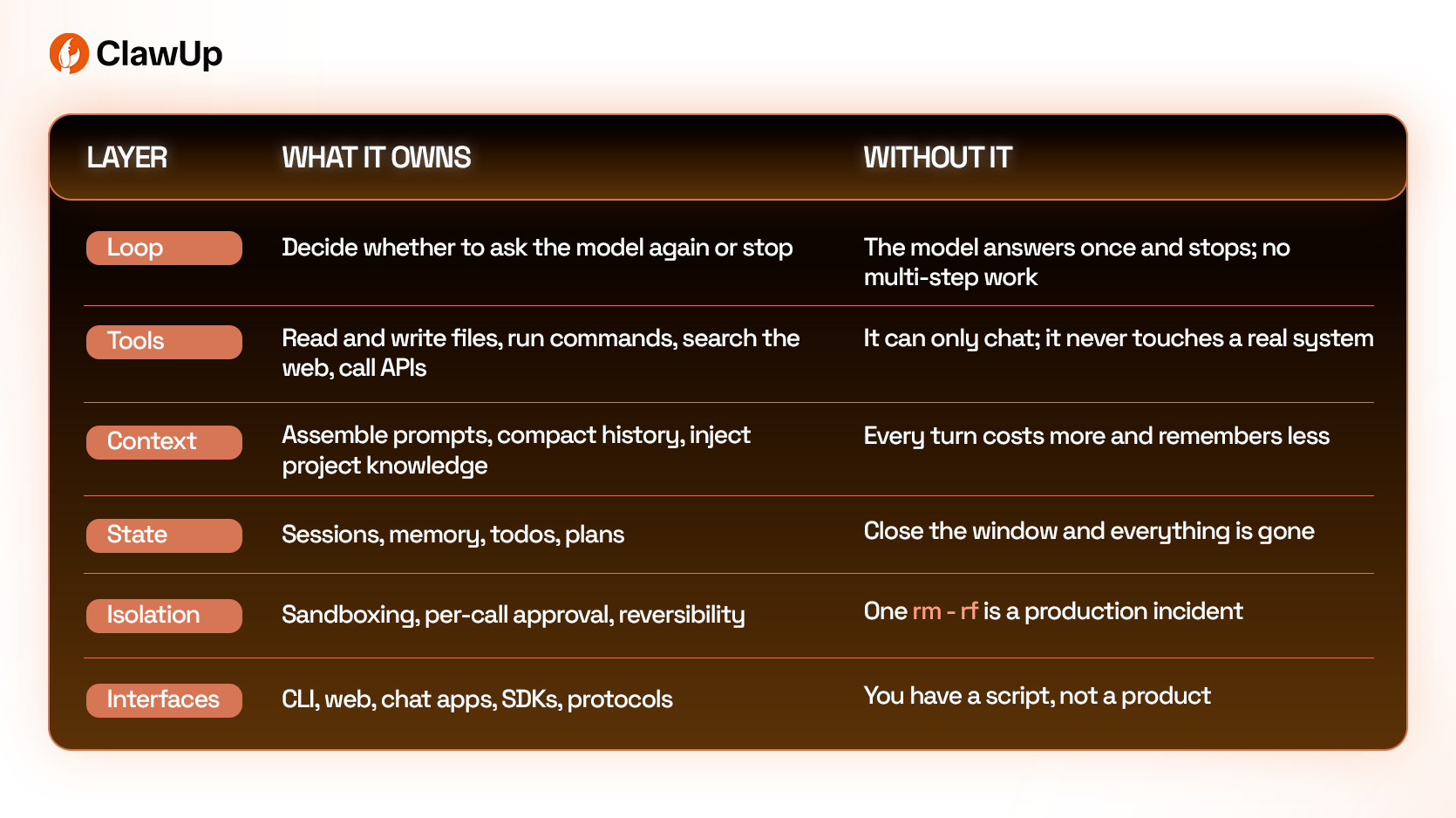
A large model does exactly one thing: text in, text out. Everything between “it can talk” and “it can do the work” is the harness. It has six layers, and different bets on those layers produce completely different products.
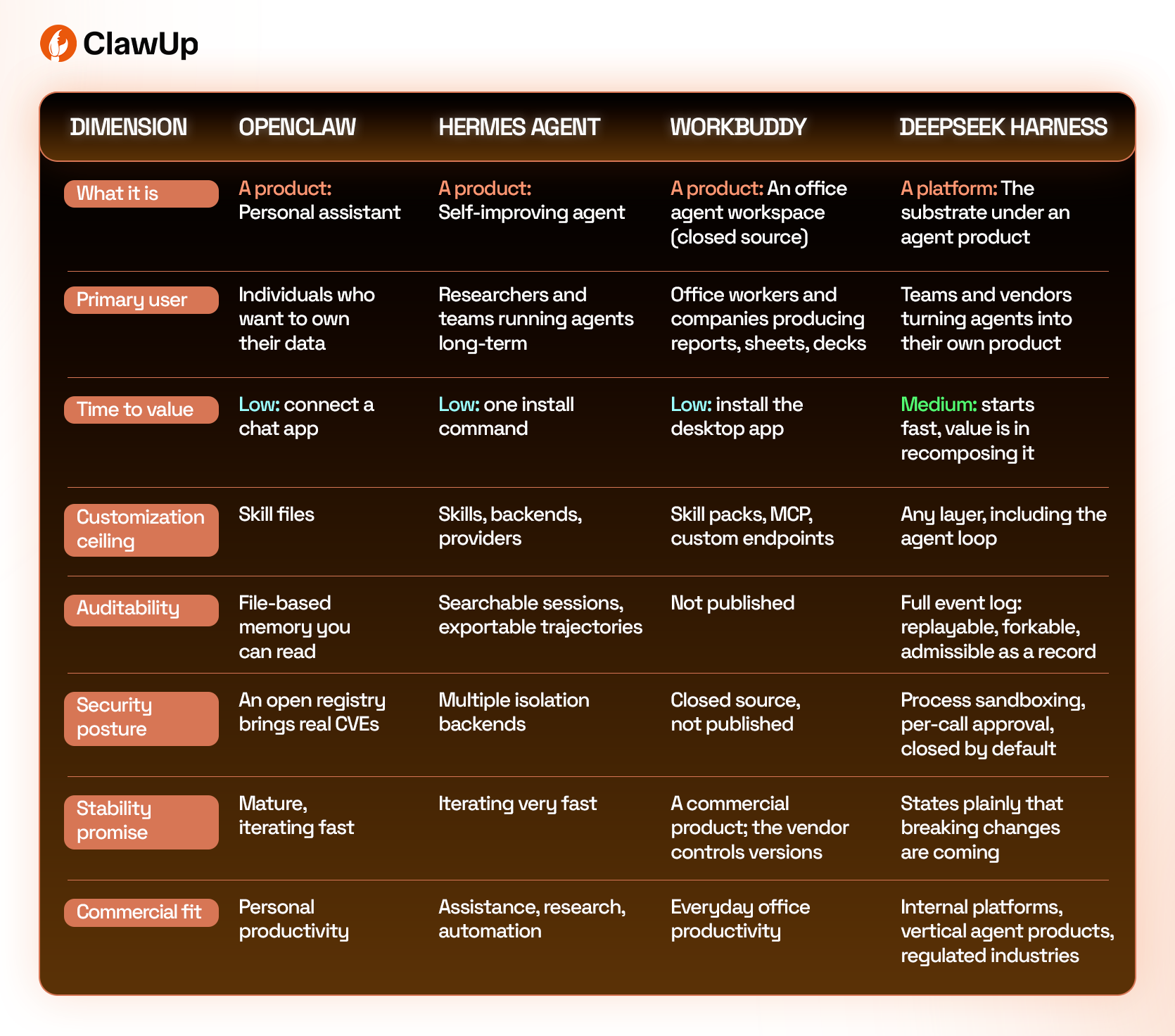
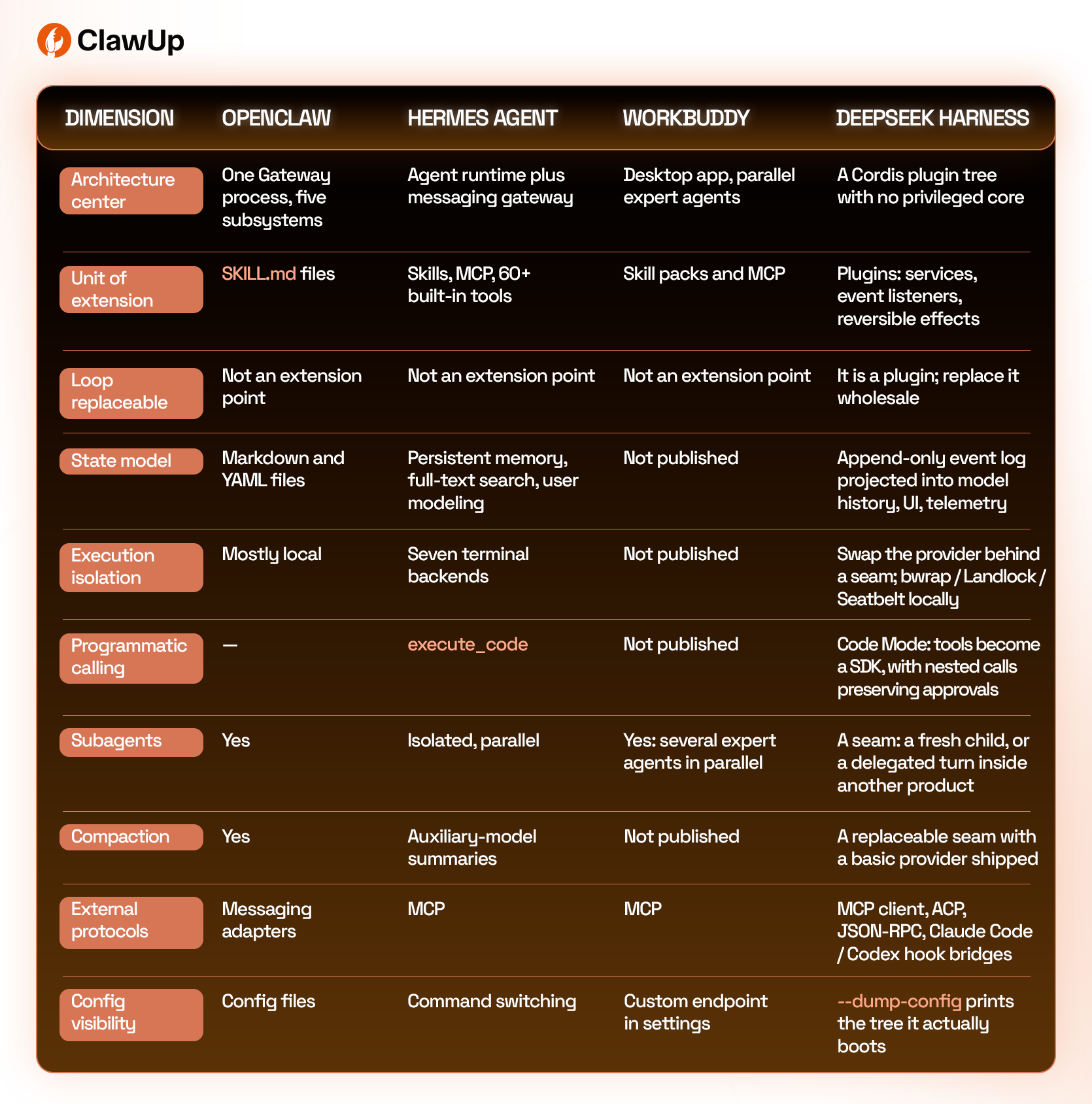
OpenClaw is a personal assistant living in your chat apps. Released in November 2025 as Clawdbot and renamed in January 2026, it runs as a resident Gateway process with a heartbeat daemon and scheduled tasks, so it acts rather than waits. Its interfaces are WhatsApp, Telegram, Slack, Discord, Signal, and iMessage. Extension happens through a SKILL.md file pulled from ClawHub or a URL, with memory and config stored as Markdown and YAML on disk. The cost is real: audits found that roughly 26% of third-party skills carried vulnerabilities, plus a cross-site WebSocket hijacking flaw rated CVSS 8.8. It puts AI inside your daily life, and the price is that it now has your daily life.
Hermes Agent, from Nous Research and released in February 2026, is an agent that improves itself. It doesn't depend on your laptop staying open; deploy it and let it run. The bet is a closed learning loop: it writes its own skills, refines them in use, searches its own past sessions, and builds a model of you. An execute_code capability collapses multi-step pipelines into a single inference, isolated subagents run in parallel, and it supports seven terminal backends spanning local, Docker, SSH, Singularity, Modal, Daytona, and Vercel Sandbox, reachable through 20+ messaging platforms plus CLI, TUI, and API. It's an agent that understands you better the longer you use it.
WorkBuddy is Tencent's office agent workspace, launched in China in March 2026 and opened more widely by May and June. It's a closed-source commercial desktop app where one instruction becomes multi-step work: several expert agents produce reports, sheets, decks, and light code in parallel. Tencent says it supports 20+ skill packs and MCP, though the internals aren't published, and models switch between Hunyuan, DeepSeek, GLM, Kimi, and MiniMax, with billing handled through WorkBuddy credits. It's an agent shaped like an office suite rather than a developer tool.
DeepSeek Harness makes everything a plugin. Built by DeepSeek AI on the Cordis plugin framework and currently at 0.1.0-rc.5 as a developer preview, dsh composes a plugin tree at boot from a profile: web is the browser application, headless a one-shot runner. The model adapter, the tool registry, the session log, and the agent loop itself are all plugins, and every configuration row is patchable from above. An append-only session event log serves as the single source of truth for everything the model sees, reachable through a Web UI, CLI, Python SDK, JSON-RPC, ACP, an MCP client, and Claude Code / Codex hook bridges. It doesn't sell you an agent. It sells you the ground to build one on.
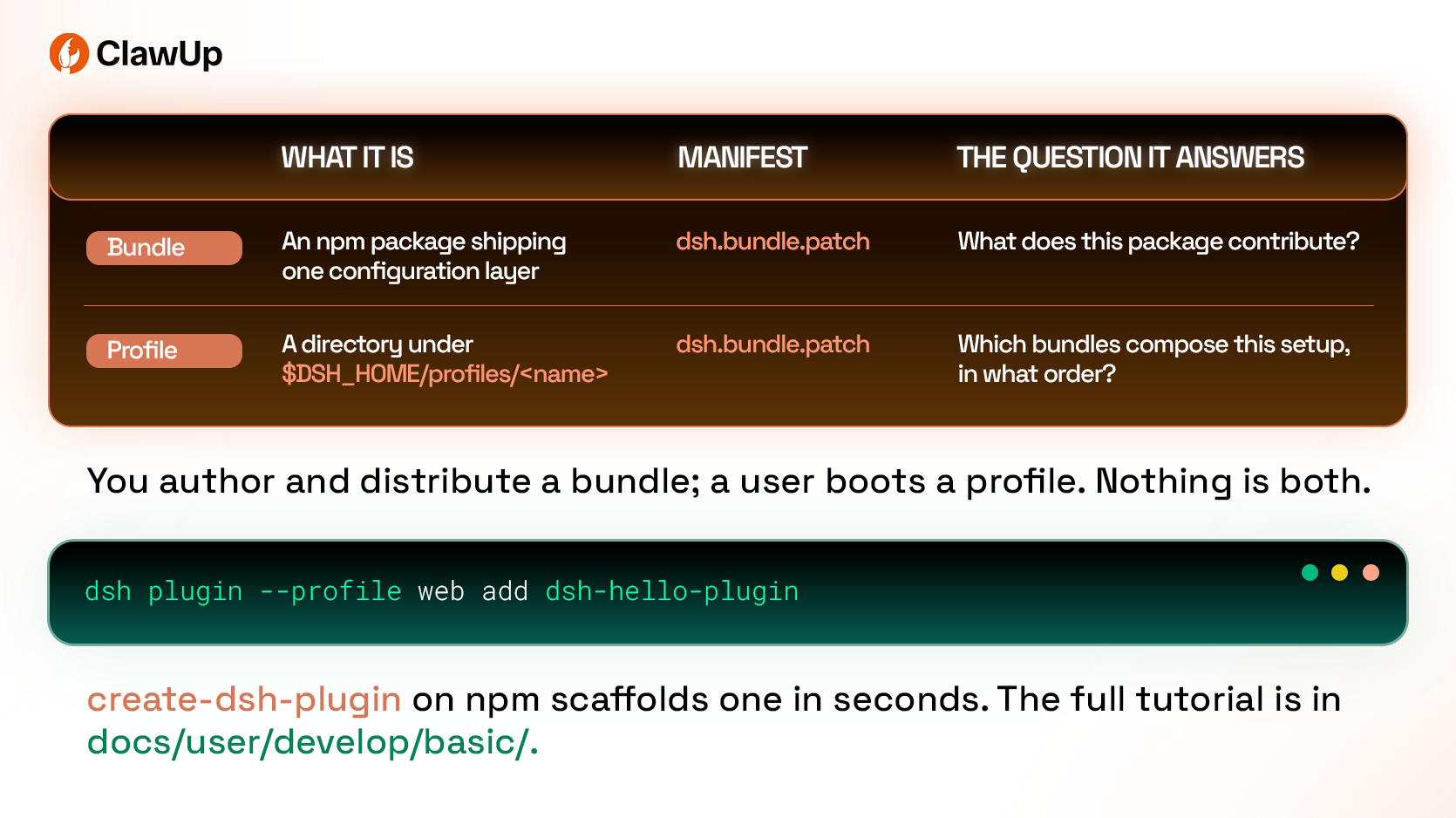
The first is composition through layered patches instead of forks. A running dsh instance is stacked: each bundle loads in the profile's order, then the profile's own patch file, then a home-level patch, then any overlay passed at launch. A patch targets a configuration row by id and either replaces its whole configuration or inserts new rows. Switching the model route, disabling a tool, or flipping the tool registry into Code Mode becomes one line of YAML, with no source changes and no long-lived fork to maintain.
The second is capability seams. A seam has three roles: a Service Definition declaring the interface, a Service Provider implementing it, and a Consumer using it, usually a model-facing tool. This is more than simply programming against interfaces. Because the filesystem and subprocess providers share one execution world, pointing them at a remote sandbox moves shell access, persistent terminals, and language server support along with them, with no provider forks required. Moving from local execution to a remote sandbox to full cloud isolation becomes a configuration migration rather than a rewrite.
The third is auditability by construction: model-visible means logged. The session log is the only source of the model's context; model history is projected from it, and raw streaming chunks preserve replay and UI fidelity. A runtime invariant asserts that anything reaching a model request must be reconstructable from that log. For engineering, that means sessions replay, fork from any point, and are searchable. For the business, the question of what exactly an agent saw, and why it did what it did, always has an answer, which often decides whether an agent ships at all in finance, healthcare, or government.
As a bonus capability worth naming on top of the three above: runtime self-modification. The model can write a plugin, mount it onto the very process it's running inside, and retract it afterward. It's deliberately opt-in, ships in no default tree, and reaches the real runtime once enabled, but it's the clearest proof the plugin philosophy is real, not marketing.
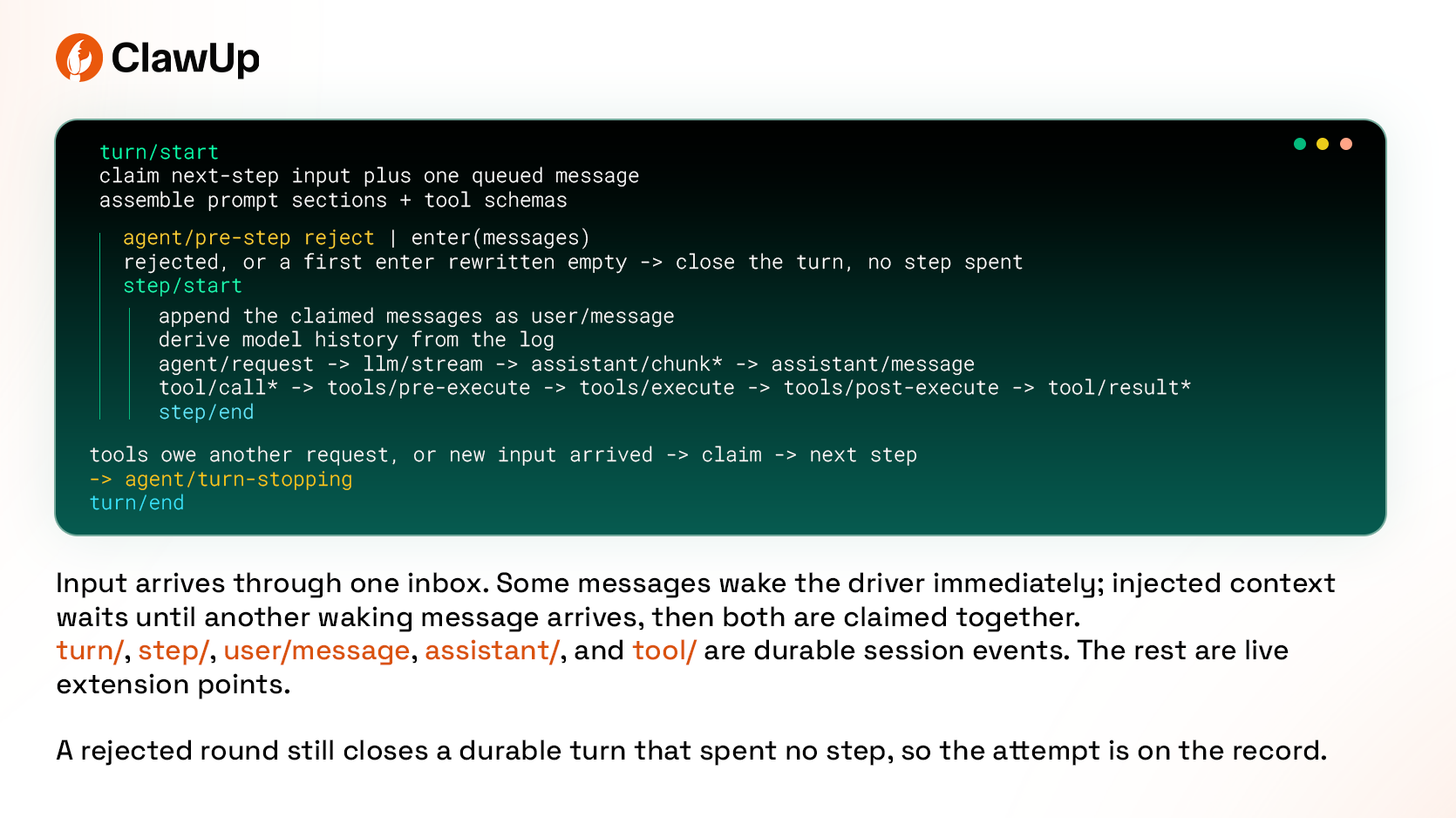
dsh has an agent loop, and exactly one package holds it: core/agent-loop is the only package with concrete loop logic, while everything else is an abstract service or a plugin on an extension point. The Agent interface itself has zero dependency on the loop, so UI, hooks, and orchestrators program against the interface, and the loop can be replaced wholesale without touching any of them.
Two definitions matter here. A step is one model request plus the tools it calls. A turn is a sequence of zero or more steps, opening when the first input is claimed and closing once nothing is owed. Input arrives through a single inbox; some messages wake the process immediately, while injected context waits until another waking message arrives, and both are claimed together. Waterfall extension points sit at each stage, before a step, before a model request, during streaming, and around tool execution, letting a listener intercept and modify behavior by calling a next() function to delegate onward, or short-circuiting the chain by not calling it. That's precisely why adding an approval gate in front of every tool call requires no change to any individual tool. The repository states its own rule plainly: new behavior goes on extension points, not into the loop; changing agent-loop itself means updating the architecture document alongside it.
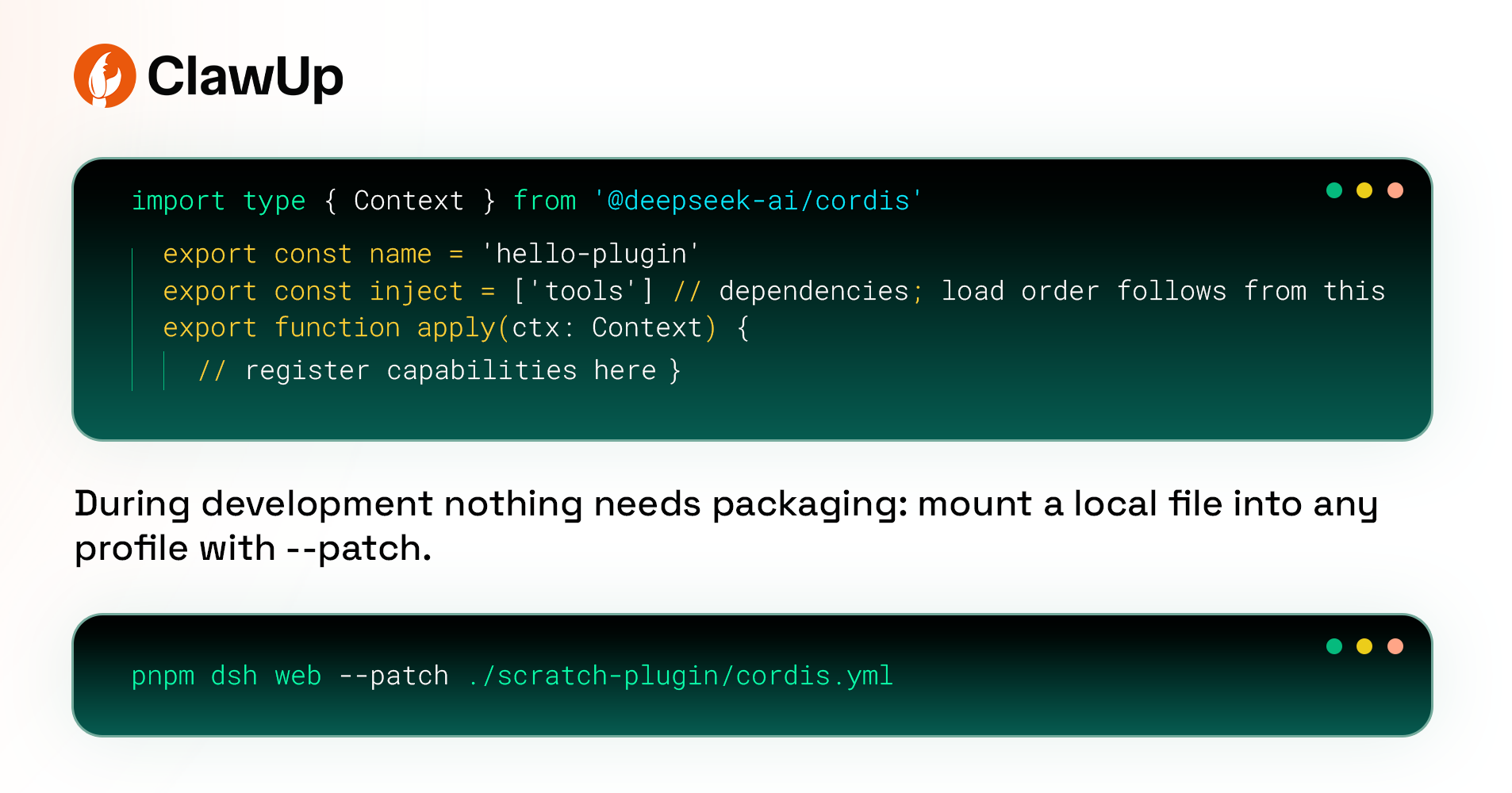
The mechanics stay simple by design. A plugin is a module that exports a single apply function; the framework calls it on load, and the plugin registers capabilities through a shared context object. During development, nothing needs packaging at all; a local file can be mounted into any profile with a single patch flag at launch.
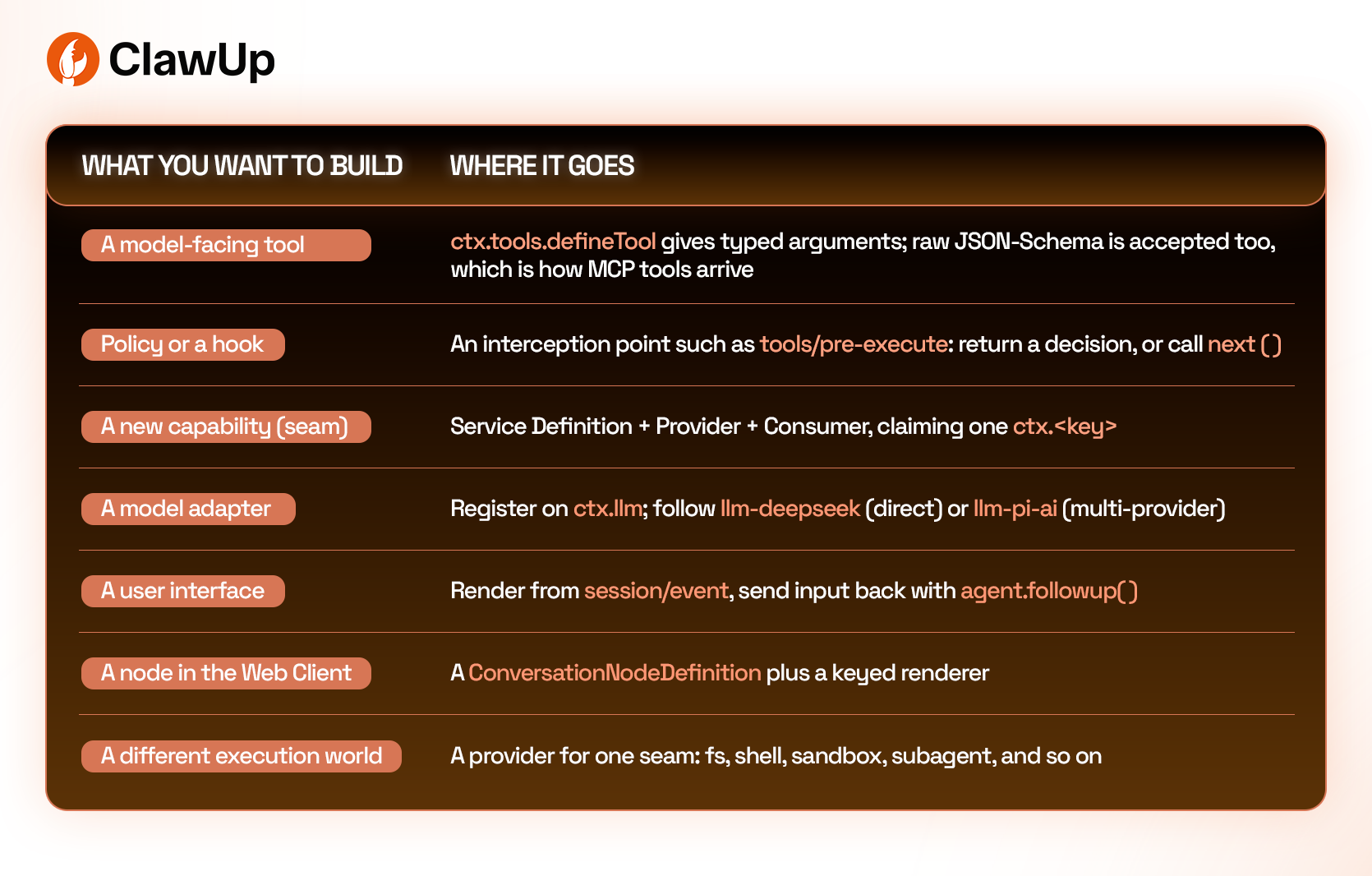
Three things matter when building one. Configuration should be declared through the framework's schema system rather than hardcoded, since anything that varies by deployment is meant to be a config field, and the repository explicitly forbids hardcoded tunables. Dependencies should be declared explicitly rather than expressed as a manual boot order. And registration is treated as an effect: contributions unwind automatically on unload, so no cleanup code needs to be written by hand. One more rule the runtime enforces on top of all this: model-visible means logged, so any new model-visible input requires a corresponding new session event rather than being slipped quietly into a prompt.
None of this comes free. DeepSeek Harness is a developer preview, and breaking changes are stated up front, so it isn't something to bet a production system on unless upgrades can be tracked closely. There's no chat-app entry point out of the box; wanting WhatsApp or Telegram today means OpenClaw already does that, while dsh would require writing that plugin from scratch. There's no built-in learning loop either: Hermes Agent ships self-authored skills and user modeling, while dsh gives builders the seams and expects them to assemble the loop themselves. And the price of all that replaceability is conceptual: Cordis has to be learned before any of it clicks.
OpenClaw is a personal assistant product, strongest at chat-app reach and its skill ecosystem, weakest at the security surface that comes with an open registry. Hermes Agent is a self-improving agent product, strongest at memory and its self-improvement loop, weakest in that customization stops at its extension points. WorkBuddy is a closed-source office agent workspace, strongest at office deliverables and its footing in the Chinese enterprise ecosystem, weakest in that its mechanism is neither visible nor replaceable. DeepSeek Harness is the substrate under an agent platform, strongest at replaceability and auditability, weakest in that its ecosystem is still too new to be proven, with breaking changes still ahead.
Choose OpenClaw if you want an assistant. Choose Hermes Agent if you want an assistant that learns you. Choose WorkBuddy if you want everyday office work to move faster. Choose DeepSeek Harness if you're building an agent product.
For anyone building on ClawUp thinking about what production-grade agent infrastructure actually requires, this is the layer worth watching closely, because a powerful runtime was never the hard part. Making every piece of it replaceable, auditable, and swappable is.